Saturday, December 29, 2018

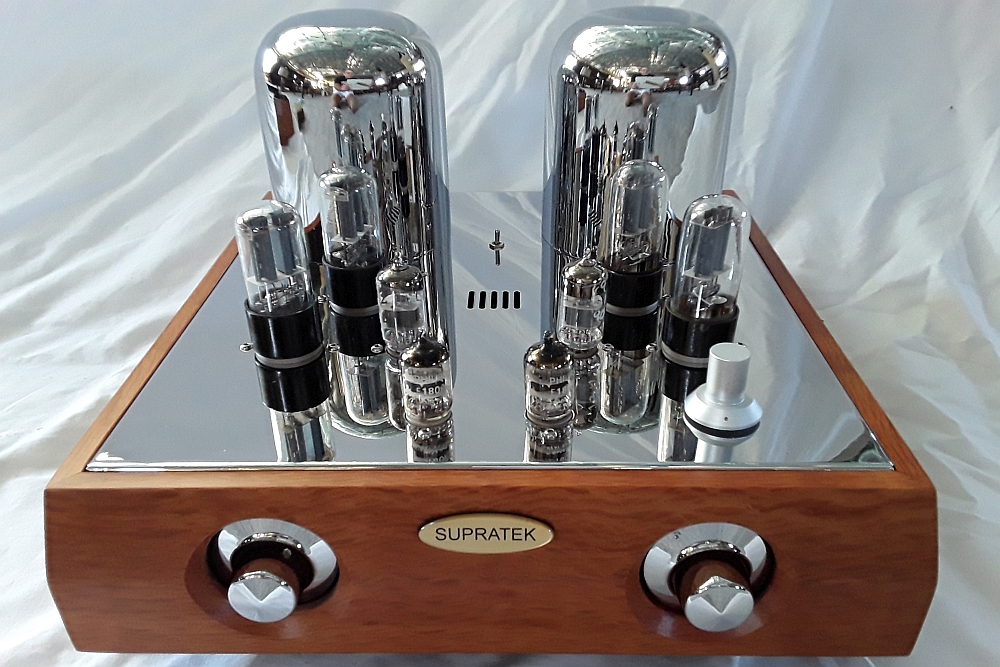
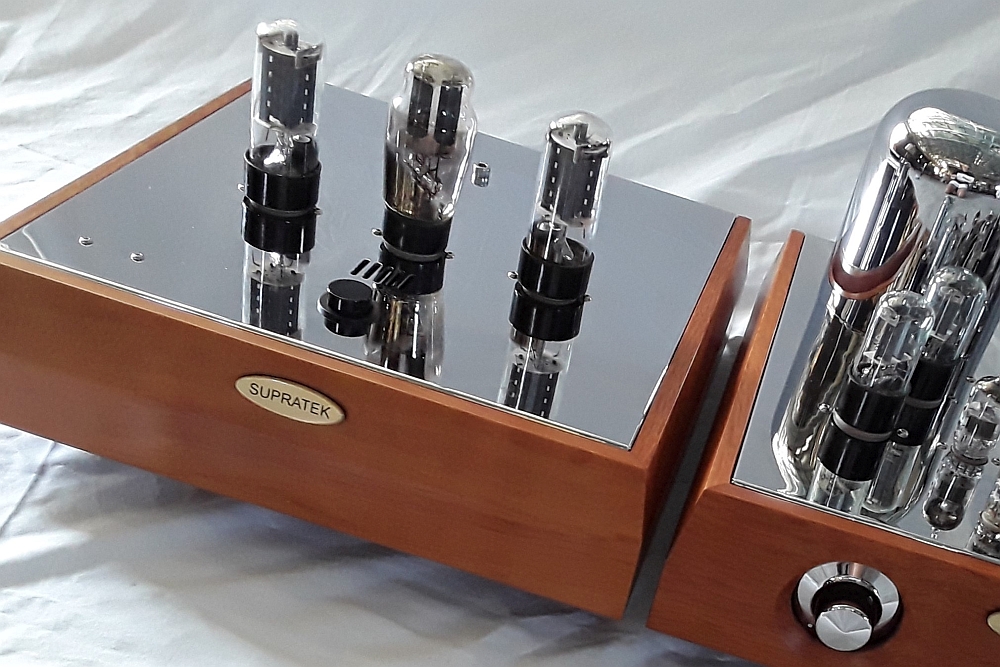
Chardonnay Pre-amp


I haven't built a Chardonay for quite some time, as I've been very busy building LCR Cortese preamps.

The latest version of the Chardonnays are loaded with features- remote volume, XLR and RCA in and outs, adjustable gain and with a choice of finishes.

They employ much of the circuitry of the more expensive Suprateks- tube rectification and tube shunt regulation , the dynamic sound of high gain 6SN7 tubes , and the gain can also be adjusted to suit any system.

Output impedance is very low and they can drive any or multiple power amps.

At $US2000 for the basic model they are surely the best value in high end audio, as they have repeatedly been shown to embarrass preamps costing over $20,000.

I've built the Chardonnay to be as rugged and reliable as possible; in 30 years time they will be as good as new, perhaps a new rectifier tube every 5 years and  other tubes every 10, although there are plenty of twenty year old Chardonnays with original tubes.

I recently got an email from a senior writer from one of the very top end hi fi magazines who had just purchased a 15 year old Chardonnay - he congratulated me on its sound and thought it one of the best preamps he'd heard.


Wednesday, December 12, 2018

The Voice Of The Concert- the Western Electric sound.

There's a Korean audio company that is (in)famous for displaying 1930's built Western Electric speaker systems at audio shows and upstaging just about every other display.

Here's a story about it, from John Darkos website
 https://darko.audio/2016/05/fucking-hell-western-electric-horns-silbatone-fun/


Fucking Hell + Western Electric horns = Silbatone fun


  • munich_2016The F word. No, not that word! I’m talking about fun. Remember fun?
    Many attendees of Munich High-End 2016 will talk of fun after the fact but walking the hallways and sitting down amongst them in many of the Atriums’ high-end exhibits, it didn’t look like there was too much fun getting about. A lot of solemn, serious faces sitting expressionless in front of a lot of solemn, serious music.
    Not so in the Silbatone Acoustics room. The South Korean company metaphorically wrote “FUN” in 10ft high neon lettering; roughly the same height as their monster Western Electric 11A horn system.
    silbatone_we_3
    This awe-inspiring rig generated a full house for most of the Munich show’s four day run. Beer, some of which was called Fucking Hell (details here), helped keep the fun flowing.
    Silbatone were asking: is newer really better than old?
    How old?” you ask. Originally designed for PA use, the 11A horns date back to 1924. For greater bandwidth, they were augmented at the M.O.C. by a pair of Western Electric’s  “movie speakers”- from 1926.
    Providing the go juice were VT1 and VT2 amplifier tubes, here given a little nudge from MOSFET power to bring output up to 3 watts. Tubes that were made in 1914!
    The sound was as effortless as I’ve heard at any show. But hey, such audiophile-centric judgements dissolve to nothing upon hearing Prince’s “Sign O’ The Times” played back through what was essentially a hundred year-old hifi system. Bonkers in the best possible way.
    Silbatone’s room easily gets my Best In Show gong, primarily because it made me, and probably others, forget about being at a hifi show, if only for a short while. For those keeping score, best sound in show still goes to Dynaudio‘s new Contour series standmount.
    Is old better really than new? On practicality, not a chance. On SQ, possibly. It’s certainly no worse – just a different flavour. On smiles generated amongst the audience, abso-friggin-lutely!
    Further information: Silbatone Acoustics
    silbatone_we_2
    silbatone_we_4
     I'm presently having the same amount of fun listening to The Azura horns , with WE type compression drivers - not as big as this system above, but still substantial in size.
    Every time I sit down and listen to a recording its just like going to a concert.  So dynamic and realistic.
    There's no "horn" sound as such- yes there is some coloration and I'm sure they may not be totally accurate. 
    I have the means to measure the response, but they sound so good as is, that I'm reluctant to fiddle with them.
    Azura's Martin Seddon calls his horn system "Voice of the Lounge" in reference to the Altec's phrase "Voice of the Theatre" - I'm calling my Azura's "Voice of the Concert" because that's what they do. 
    I've intended to do The Melbourne Hi Fi show the last few years but never got there, maybe I should go this year and take the horns , that would be fun.


    Suhendran's Dual Cabernet.


    I'm not a big fan of HT (home theatre) bypass in a stereo preamp, and I'm also not a great fan of balanced operation (see previous post for reasons) but I realize that for many people these options are a necessity, and I've offered both HT bypasses and balanced outputs in my preamps for many years.

    As I've explained,  true balanced operation via a centre tapped transformer is the purest and most transparent form of balanced , and is the only method I use.

    Suhendran needed to integrate his HT system with a Supratek preamp, but he also recognised the advantages of using a Dual Cabernet preamp to bi-amp his speakers.

    Any speaker with seperate connectors for bass and mid/treble can be bi-amped , which provides a good performance boost, but with the Dual Cabernet, and its two seperate line-stage circuits, with level controls for each, its possible to adjust the levels so as to adjust the bass and treble to get a perfect setting for achieving the ideal tone for room and personal taste.

    No passive crossover in any speaker is perfect for all conditions- they are all compromises, but the Dual Cabernet lets you dial in exactly what is best for your room and taste.

    Suhendran's design request was a little different as both of his power amplifiers were XLR input connections . The Dual only has one set of XLR output , so we decided to sacrifice the preamps input XLR and use that as the extra output XLR.

    Both of these output XLR's had to be switched into the HT bypass circuit, which is easy enough to do on a printed circuit board, but quite a job with hard wiring , nevertheless it worked out well.

    Suhendran also wanted to use a DSP (digital sound processor) on the bass amplifier , in order to do some bass EQ for room correction, so I put a loop into the linestage circuit which will be used for bass.

    The advantage of this is that you get the benefits of DSP in the bass spectrum, but it doesn't affect the mid/treble region, no opportunity for digititus in the ear!

    Here's a diagram of the preamp integration.


    And here's a pix of completed preamp. Its finished with ebonised black wood cabinet and satin black chassis, to blend in with all black component system.

    Worked out well, but a lot of work!


    Saturday, November 10, 2018

    Azura Bass Horns


    Over the years I've had a few of Martin Seddon's Azura horns.  They are tremendously impressive - there's nothing else like a horn for dynamics  and "you are there" sound quality.

    But I've never been able to live with them for long term. I need speakers that are accurate, and whilst its possible to use all sorts of implementation to get anything accurate these days, it isn't always agreeable.
    Horns do have a "horn" sound - some call it a "honk" or "quack", but its just a slight tinge to the midrange that cuts a little naturalness from the response. Or at least that is the impression I've always had.
    My Supravox 215 field coils in a large OB (see previous blogs) are the most natural and musical speakers I have , amongst my 4 systems set up in my (big) listening room.

    All the previous horn systems I've had used bass reflex, Onkens or sealed enclosures for the bass frequencies. I've never had a full horn system where the bass is also produced by a horn.
    The reason for this is that bass horns that can go down to the necessary 40 or 50Hz are BIG - they need a lot of floor space and dedication to own.

    However I've always wondered if a horn system really needed to be a complete horn package , where bass, mid and treble are all covered by dedicated horns, and the resultant synergy produces a sound without compromise and weakness's.

    Listening to Martins all horn system piqued my interest and for too many years now I've had a set of his 160Hz Azuras , with the intent to build his matching 50Hz bass horn.

    Martin uses the Line Magnetic LM555 field coil compression driver in his 160Hz horn. Its not cheap at $US5000 a pair. Its a direct copy of the very famous and desirable Western Electric 555.

    The Atlas PV5-HD costs about a tenth of the price and is reported to have been based on the WE 555, with some compromises, a phenolic diaphragm,  alnico magnet etc.

    Martin suggested that it could be quite good in the 160 so I ordered a pair and we did some measurements that were very encouraging.

    But this time I definitely wanted a full range horn system, and the picture you see here is the result of a very intense week of woodworking.

    The bass horn is time consuming to cut out, and surprisingly quick to assemble.
    Its a L shaped horn, which gives the horn length in a reasonably compact  shape (and appealing to a Ducati L-twin owner!)
    Cut off is 50 hz, and simulation looked very good.

    The driver is a Supravox 285 RTF , courtesy of my friend BobM , and ideal for this situation.
    At this stage there is no enclosure behind bass driver, but building that soon. It can be used with or without enclosure.


    With Enclosure


    Without Enclosure

    The 160Hz horn is mounted above the bass with wooden supports , and the treble tweeter is between the two.

    The tweeter is a Yamaha horn with JA4281 compression driver- fairly common but it does the job.

    The crossovers are something I just cobbled together out of my junk box to get it going - simple 6dB slopes with an inductor on bass, and caps on mid and treble for  crossover points at 300Hz and 2KHz.

    Martin has a lot of experience with some sophisticated lower order crossovers (?) and I'll be investigating these soon.

    Seperate amps for all horns, so 6 tube amps, all with level controls for very fine adjustment of tone.
    Its consuming, but active/passive gets the results I require.

    So how does it sound?

    Well if you've only heard horns with non-horn bass , you haven't heard a horn system!!

    The most obvious thing is the very low levels of distortion, bass is very clean and defined , quite different from conventional moving coil drivers and just so involving to listen to.

    As is the midrange , that "honk" is virtually gone, and I think further work with crossovers/amps/adjustment will eliminate it completely.

    I get tired of trying to describe sound , so I'm just going to say its as good as I've heard.

    It takes a little re-conditioning of the mind , as there is so much that is so different , that you wonder if it is "too good" , but it soon becomes obvious that this is what it actually does sound like.

    Then I just put record on after record, as if hearing them for the first time, and its only early days for this system!

    I'ts a shame most won't get to hear something like this, let alone have the space (and dedication to fine music) to actually build it.

    http://www.azurahorn.com/index.html

    Tuesday, October 16, 2018

    Special Sale - Cortese

    I've just finished this Cortese- moving coil compatible phono stage with linestage.
    Famous Supratek sound , same gorgeous looks , but has a slight flaw in chrome at rear back. Its barely noticeable but I've put a big discount on price.
    Normally retails at $US4000, but  discounted to $3000. That's a big saving on a preamplifier which competes with , (and beats many) 5 figure preamps.
    A good tube preamp is the heart of any good system and here's a rare opportunity to get the best!

    supra@supratek.com.au


    Tuesday, September 25, 2018

    Supratek phono-preamplifier


    I've had many requests over the years for a phono only preamp, ie no line stage, just a phono stage to be used with an additional line stage.

    I've never released one because I think the synergy between phono stage and linestage is very important , and they need to be designed to compliment each other. 
    And a phono stage is very critically dependent on the quality of its power supply, so its power supply needs to be as well built as any of my linestages.

    Phono stages are very complex , in a Supratek Cortese phono with linestage, the phono takes up most of the chassis space and about 75% of the circuitry.
    When all this is considered it really makes sense to combine the two in one chassis, however I've relented as some people have Supratek line-stages and want to use vinyl as well.

    This a moving coil only phono stage with around 75db of gain , so it will drive any low output MC cartridge. No step up transformer required.
    It has provision for two inputs, for those with two arm turntables.
    Adjustable cartridge impedance - 10,100,1000 and 47,000 ohms, or whatever customer requests. 
    Tube shunt regulation with over-engineered and huge power supply .
    Power supply in seperate "black box" with 5 feet of connecting cable .

    Tube compliment is 6688(E180F), 6H23 (6922) and 6H8C (6SN7) for phono and 6L6GC(6N3C) for regulators. 

    The unit is very quiet and may be the quietest moving coil all tube phono available. 

    It is available in a variety of finishes- shown here is polished copper - chrome and black are also available.

    It comes as a standard model or the LCR version using Lundahl transfomers.

    Price varies from US$1750 to US$4750 , depending on configuration and options. 

    Built with Supratek's 30 years of experience and reputation  for world class preamplifiers, it will easily out-perform other brands costing up to 5-10  times more.


    Wednesday, September 5, 2018

    High Efficiency Open Baffle Loudspeaker.


    OK Ive tried the Supravox 215 Field Coil driver on an open baffle system, and the 285 on another OB, so now its time to see if its possible to combine the two to create something even better.

    The previous blogs are here :
    http://supratekaudio.blogspot.com/2016/10/supravox-215-field-coil-driver-pt1.html
    http://supratekaudio.blogspot.com/2016/10/supravox-215-ec-field-coil-driver-pt-2.html
    http://supratekaudio.blogspot.com/2016/10/supravox-215-ec-pt-3.html

    http://supratekaudio.blogspot.com/2018/08/supravox-open-baffle-high-efficiency.htm


    To rehash, high efficiency (HE)gives you dynamics, open baffle (OB) gives you boxless , uncoloured sound.
    There are lots of compromises and limitations with HE and OB, but the Supravox drivers are best at minimising them.

    So this is what we have.


    In the middle the Supravox 215 EXC Field coil driver is still the main star - its run full range without a crossover.

    Below it, and filling in the lower midrange and most of the bass is the Supravox 285.
    I'm using a MiniDSP digital crossover thats set for 300Hz and does some paraEQ on the subbass.
    Amazing good value for sound, and at the bass frequencies does as good a job as my DEQX.

    There's no high pass filter on the 285. With OB operation there's an acoustic rolloff with the 215 and although technically not perfect, in real life it works and sounds very good.

    Sometimes crossovers do as much damage as they do good.

    Supravox recommend a 20mH inductor on the 285 as a first order low pass filter, which I haven't tried yet - I've ordered these

     https://www.parts-express.com/erse-super-q-20mh-16-awg-500w-inductor-crossover-coil--266-960

    and suspect they might be quite good, although they dont give the option of paraEq for the bass.

    The treble horn is from Yamaha's PA range and is the JA-4201 compression driver mounted on an aluminium horn.

    The horn is covered in lead sheet and sound-deadening to stop ringing , which is very pronounced untreated.

    I wasn't convinced that this was the greatest horn when used as a midrange/treble unit- it was a little ragged in the mids, but used solely as treble it sounds very good- I think that its very important to match efficiencies of the drivers as close as possible, so a horn tweeter is a good choice.

    This system is a match of passive and active methodology.

    The 215 is used fullrange without a crossover , but being a field coil it does have its own power supply for its electro-magnet.

    The 285 is used from 300 Hz down , with the miniDSP digital crossover  providing a 48dB cut off and parametric EQ around 50Hz, to counter the open baffles acoustic roll off.

    The horn treble simply uses a vintage paper in oil cap for a 6dB first order rolloff at around 2500Hz.

    Each driver is connected to its own seperate power amplifier. In this case they are all tube amps , chosen for the specific sound they contribute to the final mix. They all have level controls to adjust the balance between bass, mid and treble drivers.

    The preamp is a Supratek, which has very low output impedance and can drive all 3 output channels easily.

    I also have the option to use a Dual Cabernet which then gives me the option to connect the bass channel separately , with its own linestage and adjustable output , to easily change bass level, at the preamp.

    You may think this system sounds a little "complicated" and complex, but I assure you that it makes fine tuning of the system a very simple and easy, and also very rewarding task.

    I've seen people spending months trying to get a three way passive crossover "just right" and never getting there.

    This system is very tuneable , and can be quickly adjusted for taste and requirement.

    Above all, it is as dynamic as all hell, and throw in the added punch of high efficiency drivers and you get realism that is as real as a punch in the face.

    No its not a Magico , its twice as exciting and much more interesting. You can hear EVERYTHING with a Supravox/Supratek/Active-Passive in your house.

    Yes they need large panels and the electronics take up a bit of space, but its the price you pay, and what a result.

    So how does this 215/285/4201 version compare to the 215/Eminence15"/RAAL version?

    I prefer the 215 with the Eminence bass drivers. Just. Its a matter of subjectiveness , they're different , but one's not necessarily better. The 285 is gruntier, has a more forceful punchier bass, that is just a little too much sometimes. It doesn't quite have the naturally defined and acoustic tone of the two 15" drivers, which is  what you would expect - one 10" driver v two 15" .

    The 4201 horn is very exciting , and without being too obvious, lets you hear all the detail. The RAAL might be a little less exciting , but delivers the same detail, and perhaps is a little more subtle and natural sounding.


    I do think the 285 and the 4201 together make  an excellent two way HE  system- its punchy , has a huge soundstage , delivers big time. Needs little power to make a big sound, and you will never get tired of it, something that the Lowther/Fostek/Tannoy HE speakers seem to be guilty of.

    Like the Supratek preamps, the Supravox drivers are not cheap, but neither are they expensive for the performance they deliver, and may be best value you can get, perhaps even at any price.

    EDIT.

    Supravox recommend the 285GMF be used with low power amps, and it certainly seems very happy with a 300B Single Ended tube amp. Its a little less grunty , and follows the bass line more easily , with better definition with a low power amp than with a SS amp, which seemed to overpower it, which is interesting, and pleasing.

    I'm going to see if I can get hold of a 215RTF to go with the 285GMF and the 4201 horn- I think that with an all tube system, it might be something special.


                                                                              285GMF


                                                                                 215RTF


    Wednesday, August 22, 2018

    Supravox Open Baffle/ High Efficiency

    I have the full gamut of speakers in my workshop- conventional moving coil , electrostatics, horns, but I find the most satisfying and the ones that take me closest to the music are my open baffle/high efficiency speakers.

    Open baffle because all wooden boxed speakers colour the response DRASTICALLY . You dont really realize it till you have lived with open baffles for a while and then gone back to wooden boxes- the bass from a wooden box is just plain mud in comparism to an open baffle.

    Of course there are various degrees of this "muddiness" and some wooden boxes are much better, through the use of extensive bracing, heavier materials and exotic materials (aluminium etc)

    Wooden boxes can produce more power and "thump" but for pure definition and realism it is very hard to beat the sound of an unihindered driver being allowed to follow the music without restriction or resistance.

    Again, this is a little simplistic, and there are many conditions that need to be followed in order for an open baffle(OB) to outperform a wooden box.

    Sadly, there has been a lot more effort in designing drivers for boxes than OB's and good drivers, designed specifically for OB's are rare.

    The baffles have to be of a largeish size to get reasonable bass , and for the lowest octaves of bass , DSP or subs are required.

    There are a few companies making drivers for OB, with different degrees of success. For my money, the best I've heard are the French Supravox drivers.

    They have extended frequency response , which is relatively smooth , and fulfill another requirement for audio bliss which is high efficiency. (HE)

    High Efficiency = Dynamics.  Its as simple as that, if you want excitement and to get as close to realism as possible , then the higher efficiency your speakers have , the better they will be at extracting dynamism from your recordings.

    Again, very simplistic and there's a huge caveat to this statement.

    HE drivers are invariably coloured and often a little (or a lot) ragged. Think of Lowthers, which might be impressive at first listen, but become quite demanding to long term listening.  Some use complex notch filters or DSP to tame them, but its infrequently successful.

    The Supravox are not perfect, but they are smooth enough to play music very well, and with the advantages of high efficiency produce extraordinary amounts of micro and macro dynamics.

    I've written in this blog of my Supravox  215 Field Coil drivers, used with 15" Eminence bass drivers and Raal tweeters.

    The 215 are used full range, the tweeters have a simple 6dB crossover , and the bass drivers use DSP to roll of the upper bass and para EQ to equalise the lower bass response.

    With a nearly all tube system, it works a treat , and while perhaps not a reference quality speaker , its damn impressive.

    Its impressive because it  has nearly the dynamics of a full horn system, without the colouration that horns always bring with them.

    Bob sent me a pair of the Supravox 285 -  , and being larger than the 215 you would expect better bass response from them.

    I built a baffle 1200mm high and 600mm wide with 300mm sides - no back , so essentially a 1200x900 mm baffle.

    The only unused tweeter I had to hand was a Yamaha horn tweeter  with a compression driver rated from 800Hz to 20,000 Hz.

    Aluminium horn that rang like a bell , but a generous layer of lead sheet on all exterior surfaces minimised that, and using it a high crossover frequency would alleviate any mid range raggedness.

    The 285 has on axis response to 7000Hz , so I used a 6dB filter at 4500 hz for the horn.

    300B SE amp on 285, EL34 PP amp on horns .

    First surprise was how good bass was, it doesn't do sub bass, but what it does do is defined and reasonably powerful. A sub at <50Hz would compliment it , but not neccessary for 90% of music.

    After an hour of adjusting levels and listening to all sorts of music, I decided to try a 12dB second order crossover on the horn.

    Perhaps a bit smoother , more listening needed.  Importantly , where it is used it doesn't sound "horny" , but matches the 285 well.

    The Supravox aren't cheap, but the results are quite unlike anything you will hear from a box speaker- you will hear every inflection and tilt of the music, every little note and the smallest detail will reveal itself , you will hear everything.  And it will sound natural and musical , without any box woodiness.

    If you have a first class preamp capable of delivering all the music (a Supratek!) then you owe it to yourself to at least listen to a well sorted and infinitely satisfying Supravox OB.

    And Bob tells me the TQWT designs are also extraordinary.


                                               Big OB at back, 285/Horn middle,  poodle front.

    Tuesday, July 3, 2018

    Soundstage

    Supratek featured in Soundstage:

    "What’s more, in the first instance, I’m excited in having provided a widely-read Australian platform to local distributors and retailers. Secondly, I have a deep satisfaction in SoundStage! Australia showcasing to the world, via news items and reviews, the genius behind gifted Australian designers like Axis Loudspeakers’ John Reilly, Brigadiers Audio’s Brad Serhan, DEQX’s Kim Ryrie, Grover Notting’s Frank Hinton, the team at Halcro, Hulgich Audio's Nicolas Hulgich, Legend Acoustics’ Dr Rod Crawford, Les Davis Audio’s Les Davis, M8Audio's Mark Thomsen, Microphase Audio Design’s Jean-Marie Liere, REDGUM Audio’s Lindy Gerber and Ian Robinson, the team at Richter Audio, SGR Audio’s Stuart Ralston, Supratek’s Mick Maloney and last but by no means least, my fellow ‘Wentworth Fallian’, VRC’s Stephen Price. And as far as those many, many other extraordinary audio artisans in this country, though I did not have the opportunity to 'visit' you up to this milestone, be sure that your creations will shine their way to us here at SoundStage! Australia "Before Too Long..." 


    Supratek Announces “World-First” LCR Phono Stage

    Western Australian valve specialist Supratek, who has been building high-end valve amplification for more than 30 years, has launched a “world-first” LCR phono stage which will be incorporated into the company’s highly revered Cortese preamplifier.
    The new LCR phono stage is currently available as an additional built-in stage to the Cortese preamplifier – which is now named LCR Cortese – and will also be available as a standalone unit in the near future. The LCR Cortese employs 6688 and 6H23 valves in the phono stage with 6SN7/6H8C valves adopted in the line stage section while the soon-to-come standalone unit will feature 6688 and 6E6P tubes. The LCR phono stage is only compatible with MC cartridges and has an astonishing 80dB of gain making it, according to Supratek, an LCR circuit world-first.
    “Supratek has produced the world’s only moving coil cartridge capable LCR phono stage” Supratek Founder Mick Maloney told SoundStage! Australia, as he continued “All tube phono LCR circuits are rare and expensive, and they are not easy to build, they require very high quality iron chokes and inter-stage transformers. With the Supratek LCR phono stage there’s no need for expensive and restrictive step up transformers. With 80dB of quiet gain the LCR circuit provides new insights into the superior micro-dynamics of vinyl. LCR circuit has amazing levels of texture and body, it really brings out the character and expression of artists and music.”
    Supratek
    The LCR Cortese’s other specifications are equally as impressive as its extraordinary gain, with a frequency response of 10Hz to 30Khz at -3dB while the overall preamplifier’s gain is adjustable between 0dB and 26dB. Input impedance is a high 100 Kohms while its output impedance is a low 40 ohms, both figures representing excellent compatibility with source and amplification components respectively. The phono stage is suitable for moving coil cartridges of 0.1mv to 2.0mV. Other features of the LCR Cortese are the availability of balanced and unbalanced inputs/outputs, adjustable gain and remote control.
    The Supratek LCR Cortese is available direct ex-factory from Supratek.
    Australian Distributor: Supratek
    +61 437 208 727
    www.supratek.com.au
    Price: LCR Cortese $US5500

    Wednesday, June 6, 2018

    Tecnical details LCR Cortese.

    The LCR Cortese uses 6688 and 6H23 tubes in its phono stage, and 6SN7/6H8C tubes for the linestage.

    The phono only LCR preamp (no linestage) uses 6688, 6688 and 6E6P tubes.

    These tubes were designed and built towards the end of the tube era, and are perfect devices for audio preamplifiers.

    The LCR Cortese is suitable for any moving coil cartridge, but not moving magnet.
    Impedance switching allows for loading of 10,100,1000 and 47,000 ohms (or whatever values are required.

    To ensure enough gain with even the lowest voltage MC cartridges (0.1mV) the phono section has nearly 80dB of gain - that's an enormous amount of gain  and its a real task to ensure quiet operation with no hum and hiss below the vinyl floor level.

    The input stage of the phono uses a cascode circuit with J-fet and 6688 (E180F) tubes.

    With nearly 30 years of development this cascode circuit negates the need for a passive step up transformer and has all the advantages of active operation- greater dynamic range , more linear frequency response and suitability for all MC cartridges.

    To ensure it is quiet , a special earthing arrangement is needed, along with extremely quiet power supplies - more on that later.

    The next stage (6H23 tube) is another gain stage with transformer output, which provides the low impedance and drive necessary to drive the L coils for the RIAA equalisation.

    These are specially built by Lundahl and are finest quality.  They are precisely measured and the required CR values are matched within very fine tolerances.

    The last stage (6H23 tube) provides some more gain and the drive needed to couple with the line stage.

    Polyprop caps are used throughout, but kept to a minimum.

    In line with Supratek design goals, electrolytic capacitors are only used when absolutely necessary - there are only 2 in the phono stage,  and none in the linestage.

    Compare this to a typical phono preamp which can have dozens of strident sounding electrolytic caps.

    The line-stage is another multi- year development that is designed to be as transparent as possible , in order for the astounding sound of the LCR circuit to come through unaltered and rich in dynamics.
    It has extremely low output impedance and will drive any, and multiple power amps.

    I've also concentrated on making both the phono and linestage as robust and reliable as they can possibly be.

    They only use design circuits and components that will have an almost indefinite lifetime - I'm sure that like other Supratek products it will become a classic that will be performing flawlessly and at the highest level many years from now.

    The heart and soul of any audio electronic component is the power supply, and the PSU for the LCR phono preamp is an example of clever and uncompromising engineering focused on sound quality and robustness.

    The tube shunt regulated supply for the high voltages is responsible for the Supratek sound- precise imaging and sound-staging , and rock solid stability .

    Seperate heater supplies for both phono stage and line-stage ensure super quiet noise levels, even with 80dB of phono gain .

    The Supratek LCR phono is the only MC cartridge capable LCR tube preamp in the world.


    Monday, June 4, 2018

    How did it come to this?

    I think this is going to be the most difficult article/blog to write.
    I'm preferably a man of few words, and prose does not come easily to me.

    But I'm very passionate about sound , and derive enormous satisfaction and pleasure from listening to fine music, so when something comes along that provides even more satisfaction I want to tell all the world about it and provide some clue to what I'm feeling.
    I'm not so good at that- but here goes anyway.

    How does a tiny pointed rock on the end of a equally tiny piece of metal, swinging between microscopic ridges imprinted into black plastic vinyl provide a sound that is so textured, vivid, and alive with a stereo soundstage that is so wide and dynamic, yet equally seamless with its images of right and left channels.

    I have some very good dacs here , I'm up to date in the computer audio world, have a very nice CDP , and am reasonably competent in building and understanding digital.

    It doesn't compete in any way in equaling the sound of vinyl playback, in particular the sound of a LCR phono preamp with a high quality moving coil cartridge.

    Over the years I've been tempted to sell off my record collection, its bulky, is a pain in the arse whenever I've moved house , and just like digital , not all of the recordings are first rate.

    But I never have , because when I take the record out of its cover, place it on the platter, clean it, and then drop that rock into the groove, I'm then always grateful that I never succumbed to the temptation.

    LCR phono playback has made me even more grateful- LCR phono is the ultimate playback of any recording system, whether its analouge or digital,  nothing else compares . (Except maybe master tapes)

    Its superiority is mostly in dynamics , which is rather perverse as digital has an overall greater dynamic range , but within a LCR phonos dynamic range its faster, cleaner, simply more alive and exciting.

    And this force of dynamics is also audible at lower listening levels, if your restricted in the volume levels you can use, the LCR phono is very worthwhile.

    In comparison, digital sounds veiled and choked- yes it can sound very good , but the difference between a digital recording and a LCR reproduced recording is night and day.

    Digital has its place, it's convenience cannot be denied , and it can sound very good, but for the ultimate listening experience LCR phono , and even very good standard CR phono (both with tubes of course) will let you hear angels.

    Its taken me 30 years to build a moving coil LCR tube phono that doesn't require a step up transformer, is quiet and will work with all moving coil cartridges.

    In the next article I will go into the technical details of this design.


    Moving coil cartridges. Denon DL103, Ortofon SPU, Accuphase AC-3, Dynavector DV30.
    All with Expert Stylus cantilvers and diamonds- highly recommended.
    The SPU is superb, amazing with tube LCR.


    Thursday, May 31, 2018

    Multi tube preamp from the archive

    This preamp belongs to the guy who makes the wooden cabinets for the Supratek preamp.
    Its one of the older 300B designs, about 10 years old now .
    I had it back to do a little mod on it, and it still sounds great, especially with the LCR phono design.
    The little bit of DHT warmth sounds very nice in the right system.
    This 300B design was the early type direct coupled from the 6SN7 driver tube.
    Later on I went to a different design that enabled a little more definition , but the direct coupled designs had excellent phase performance which resulted in exemplary imaging.
    In truth, even 10 years later the Supratek sound is one of a kind and all of the diferent versions have a very similar sonic signature. Accurate tone and superb soundstaging and imaging.
    The beauty of this design is that it could use multiple output tubes- 300B, 45, or PX4.
    It had a switch to set different filament voltages and a servo to set the required plate voltage.
    Servos can be problematic sometimes, but this one was relatively simple , and has been reliable and problem free over its lifetime, and will continue to be. It ensures that the output tube always sees the correct plate voltage, even as tubes age, etc.

    Here's a pix of the stock 300B preamp


    and a pix of it with 45 output tubes and vintage 6F8G/VT-99 tubes.


    Different sound, slightly more natural sounding,  more open and a bit more dynamic but still highly defined and very 3D like. Very expensive Emmission Lab 45's though, you'd expect a good result.

    10 years on, a very capable and excellent sounding preamp, as good as the day it was made.

    If you'd like a really nice high end equipment rack, or listening chair or anything in furniture grade wood,  handcrafted by an artisan , contact me and I'll put you in touch with Jon.


    Thursday, May 24, 2018

    $45,000 for a 12AU7,12AX7 phono preamp.

    Flabbergasted, thats what I am.

    I just read a review on a just released phono preamp that retails for $US45,000 and it uses 12AU7,12AX7 tubes!!!

    12AU7, 12AX7 tubes were designed for use in televisions , but became used in audio as similar replacements for 6SN7 and 6SL7 tubes, which were genuine audio tubes.

    The 12 series were cheaper, but nowhere near the quality of the 6 series tubes.

    Substitute a 6SN7 for a 12AU7 and the difference is day and night, but for reasons of economy and ease of supply the 12 series tubes caught on and became widely used in the audio industry.

    I first used 12AU7 and 12AX7 in a phono circuit about 30 years ago- the popular RCA tubebook circuit.

    It used feedback EQ and sounded ok, but couldn't drive a long cable let alone a power amp without the easiest of a load.

    I wouldn't even use a 6SN7 and 6SL7 in a phono, although I have built a few phonos to prove it coudn't be done.

    Well, actually  it can be done, and again they sound ok, but there were some fantastic tubes released at the end of the tube era which are near perfect for the needs of a phono preamp, and are high gain and have good drive -  these tubes give very high definition , accuracy and transparency.

    The 12 series tubes are wimps in comparism and give a bloated ,warm "romantic"and "tube" sound , ok if you like that sort of ting but I guarantee you will soon tire of it.

    My LCR and Standard Cortese use 6688 and 6H23 frame grid tubes in the phono section.

    The soon to be released phono only LCR preamp uses 6688, 6688, and 6E6P tubes.

    These are combined with the fantastic enveloping LCR circuit and state of the art circuit design to produce a circuit you will never tire of listening to and enjoying.

    Classic cosmetic appearance, finest sound and $5500 for the LCR Cortese.

    Against $45,000 for 30 year old technology ,  and another $10,000 for a SUT so you can use your MC cartridge  - flabbergasting!!!


    Saturday, May 12, 2018

    Music

    A couple of albums I've enjoyed this week- both female artists and both in an acoustic frame, and both at different points in their lives.

    KASEY CHAMBERS & THE FIRESIDE DISCIPLES Campfire CD NEW

    You never know what your going to get with Casey Chambers, but I'm really enjoying this, some great songs and very good acoustic guitar, uke playing.

    Whistle Down The Wind by Joan Baez

    Another great album from Joan Baez. You'd never know she was 77 from the singing, but the songs  come from a  voice aged with wisdom and retrospection.

    Casey's songs come from someone in the prime of her life, her kids are growing up, she's in a safe place musically, lifes good, although she can sing a blues song with conviction.

    Joans seen it all, and is at a stage of life when some things get a bit tiresome , how many times do we have to watch the same old shit - gun control in America , friends dying, being the last leaf on a tree.

    Both good albums and recommended - good sound too.

    One interesting thing- Casey doesn't have a great high voice, she gets a bit screechy at the higher notes, I think she had some problems with her voice some time back.

    One way to soften this is to double track- the producer will put another identical vocal on top of the original, so you get a choir effect that sounds a bit more harmonic and agreeable.

    Its very common and just about mandatory for those not blessed with a perfect voice. 
    You'll find double tracking, or multi tracking on just about every album you own, but does your preamp enable you to discriminate it immediately ?

    Its a sign of a good preamp with excellent definition - you should be able to hear two distinct, separate voices laid on top of each other.

    The better the preamp, the better the distinction and the better the harmony will sound.

    Monday, May 7, 2018

    HighDefinition/High Enjoyment Preamp with LCR phono.


    I've been very busy building preamps , so apologies for little blog activity.

    This adaption of the Cortese preamplifier is very exciting and achieves some long held aspirations and goals for Supratek.

    Firstly, it has an LCR RIAA circuit in it, and put simply, A LCR phono is the ultimate vinyl expression.  I've been building LCR and LR phonos for many years and this design is the result of many circuits tested and evaluated over the years.

    LCR has an ease and liquidity which brings real life and vividness into vinyl playback.
    In terms of actual objective performance its not much different than the standard Cortese phono stage, but the enjoyment factor is subjectively very obvious , it simply sounds even closer to real music .

    LCR has amazing levels of texture and body, it really brings out the character and expression of artists and music- Leonard Cohen sounds more like Leonard Cohen, Dylan like Dylan, classical music surrounds you in sound, LCR really is a big deal, a real significant jump in sound quality.

    All tube phono LCR circuits are rare and expensive, and they are not easy to build, they require very high quality iron chokes and interstage transformers.

    This Supratek  LCR Cortese is the only tube phono stage in the world that is built solely for moving coil cartridges with output level as low as 0.1mV , and is designed for the majority of MC cartridges.

    Why is the Supratek the only MC capable LCR phono, when the other tube LCR phonos are suitable only for MM cartridges. ( and cost up to 6 times more!)

    With nearly 80dB of gain needed for low output MC cartridges, its very hard to get tubes quiet enough for MC use, as hiss and hum become audible with such a high gain.

    The standard approach is to build a tube LCR phono with 40-60db of gain and use a step up transformer (SUT).

    SUT's have limitations in adapting to every cartridge, frequency response and a lack of dynamics.

    The active, high gain approach used by the Supratek achieves optimum dynamics and definition from every MC cartridge, reliably and consistently.

    Only the Supratek Cortese LCR can achieve these gain levels and remain noise free , essential for the retrieval of micro and macro dynamics from your vinyl records.

    A very complex earthing arrangement, over-engineered power supply, (big enough for a tube power amp) and regulated HT voltage , in a seperate matching power supply unit with state of the art componentry and copper chassis's, ensures quiet, efficient operation.

    To match the phono stage the LCR Cortese has a line stage that is also especially quiet and capable of  the dynamics of the phono, a well as making all digital and other inputs sound amazingly real.

    The line stage is a state of the art tube design, with very low output impedance that can drive any power amplifier, and even a combination of bi or tri-amped amplifiers.

    It has the famous Supratek sound, and will carry on the Supratek reputation for reliability and ease of use.

    I often hear from customers who have the original preamplifier I built for them 15-20 years ago, with no issues and the same tubes in them!

    I've spent a lot of time and effort in ensuring that this preamplifier will perform at the highest level, and reliably over a very long term.

    Just as the early Supratek Syrah and Chardonnay preamplifiers became respected "classic" pieces the Cortese LCR will become an item to appreciate and enjoy over a very long time.

    With comparable tube LCR phono stages (without linestage) costing well over $20,000 the Cortese LCR is a handsome buy at $US5500.

    The Standard Cortese with CR phono stage is $US4500 with 85-90% of the LCR sound quality.

    Available in different finishes.


    Thursday, April 12, 2018

    Realism

    More on realism.

    Ortofon SPU Moving Coil cartridge. (on Dynavector DV-505 arm)

    LCR phono preamps.

    R2R dacs with tube output stage.


    Monday, April 9, 2018

    What is your experience for the most liquidity and presence of midrange and emotion, if not an all DHT tube rectified transformer coupled pre-amp ?

    I was asked this question:


    What is your experience for the most liquidity and presence of midrange and emotion, if not an all DHT tube rectified transformer coupled pre-amp ? 

    This is a very complex question with a myriad of complex answers, but is very interesting so lets dive in .

    I think the key word here is EMOTION, ie the feeling we get that we're connected to the music and the musicians and participating in the joy of the performance. 

    Its quite different from the "hi-fi" experience which often becomes quite critical and even non-satisfactory sometimes.

    To achieve this emotion does take a very good preamp, which I will go into, but primarily it means a synergy of the whole system , which must be very carefully tuned to be above all things REALISTIC.

    To get emotion, we must be coerced into thinking we are listening to an actual performance , voices must sound real and personal, our system has to fool us into thinking we are listening to the real thing, or as close as possible.

    That doesn't necessarily mean accuracy, although its important. Our perceptions and listening equipment - ears, consciousness are not the same and are not linear, if you have ever seen Fletcher-Munson curves you will see that it makes a mockery of linear flat response 20Hz-20Khz, although it is important to have a standard. 

    More important than linear frequency response , I think , is dynamics, especially micro-dynamics.  This is the source of realism , this is what makes recorded music sound real, when you can hear the whole spectrum.

    But don't confuse this with detail, as many do, detail is often just a tilt of the frequency response to brighten the top end , and eventually becomes tiring and un-realistic.

    Dynamics are essential, and it is essential that every part of the system can reproduce it, but it will all fail if the final component in the chain- the speaker isn't capable of doing micro and macro dynamics.

    I have 4 speaker systems in my factory, they all have strengths and weakness's and I wouldn't call any one of them the "best" - I like all of them and enjoy them all.

    There is one speaker though that repeatedly stuns people with its realism and portrayal of "emotion".

    Its a high efficiency, (nearly) full range Supravox driver , with field coil magnet, that is used in an open baffle with 15" open baffle bass drivers above and below it , and a RAAL tweeter . Simple 6dB passive crossovers , but a DEQX digital crossover for low bass crossover and some bass room correction. 

    Seperate tube amps for the Supravox and RAAL, and a SS amp for bass. 

    The Supravox has dynamics that are astounding . Its not perfectly accurate, but with active operation can be adjusted to be reasonably accurate.

    But for realism and "you are there",  high efficiency speakers have a real advantage in achieving the dynamic range that is needed, to fool one into thinking "they are there".

    Unfortunately, there are many more flawed HE speakers than there are good ones. Some are used full range and have terrible frequency responses that emphasise a particular part of the response and become very tiring to listen to. 

    People then use "soft" or "warm" SE amps to correct this situation, although it rarely does. 

    Horns are very efficient, and there are some very good horn systems, although its nearly impossible to remove the coloration of the horn geometry. But the dynamics are there in spades , and for a sense of realism they are remarkable, depending on the level of coloration - some are exceptionally good, many are bad.

    Dynamics can be achieved with more conventional moving coil speakers, but it usually means multiple drivers and very powerful amplifiers. 
    Multiple drivers means multiple crossovers, usually in the worst frequency ranges, and complexity harms dynamics. 

    Not to say that these systems can't sound very good, they certainly can, but its not easy or inexpensive to build them.

    However we do it, we need full scale dynamics from our systems for realism.

    We won't get it with "warmth" or "romantics" or tilted frequency responses .

    No lets get back to the original question:

    What is your experience for the most liquidity and presence of midrange and emotion, if not an all DHT tube rectified transformer coupled pre-amp ? 

    What does liquidity and presence mean ?  The hifi reviewers will come up with all sorts of lovely words, but for me, realism is just fine.

    Not warmth , or musical, or syrupy, or all the other descriptions that really describe a lack of dynamics . 

    There are plenty of old style tube preamps around that sound like this , simply because they don't do dynamics well. 

    For example , low gain triode stages AC or DC coupled to a cathode follower buffer, no dynamics and boring as hell. 

    To achieve startling dynamics a tube preamp must have gain , and the more gain, the more dynamic it becomes, up to a point of course, but in virtually every situation, a high gain preamp will sound more realistic.

    When I made the first commercially available 300B preamp, it had a 6SN7 triode as a driver tube, to get the gain it needed to be dynamic. Without the 6SN7 it was just another "nice" sounding  preamp. 

    All the DHT preamps I built using 300B, 45, PX4, 101D ,4P1L etc had a 6SN7 driver stage to get the gain needed for a dynamic sound with a wide soundstage and precise imaging. 

    They also were used with output transformers to limit the gain to manageable levels and provide low output impedance and powerful drive ability.  6 solid state power amps in an active system? No problem!

    DHT tubes aren't perfect though, and when combined with high gain designs can be problematic in regards to microphonics and noise. 

    And although DHT designs can produce perfect frequency response and square waves, I do feel that some dynamics is lost through the direct heater connection of a DHT tube.

    So to turn the question around to: 

    What is your experience for the most REALISM , if not an all DHT tube rectified transformer coupled pre-amp ? 

    I would say my choice would now be a high gain non-dht 6SN7 design with transformer coupling , or perhaps a 6SN7 driver with a 6N6/6H30 White Follower.

    If you have an different interpretation of "liquidity and presence of midrange and emotion" and think it should mean warmth or some other form of coloration then yes , a DHT preamp should suit you fine, at the expense of  some micro-dynamics. 

    Again, it all comes down to the synergy of the entire system, perhaps with a bright HE speaker, a DHT preamp would be the best solution , or if "warmth or romantics" is something you value then again a DHT preamp should suit.

    There's really no right or wrong, its a journey to find whatever ultimately helps you enjoy the music. 

    After 30 years of building preamps and using just about every available triode tube, for me the 6SN7 and its equivalents are still "king" of the preamp tubes.